Home Industries Propylene Glycol

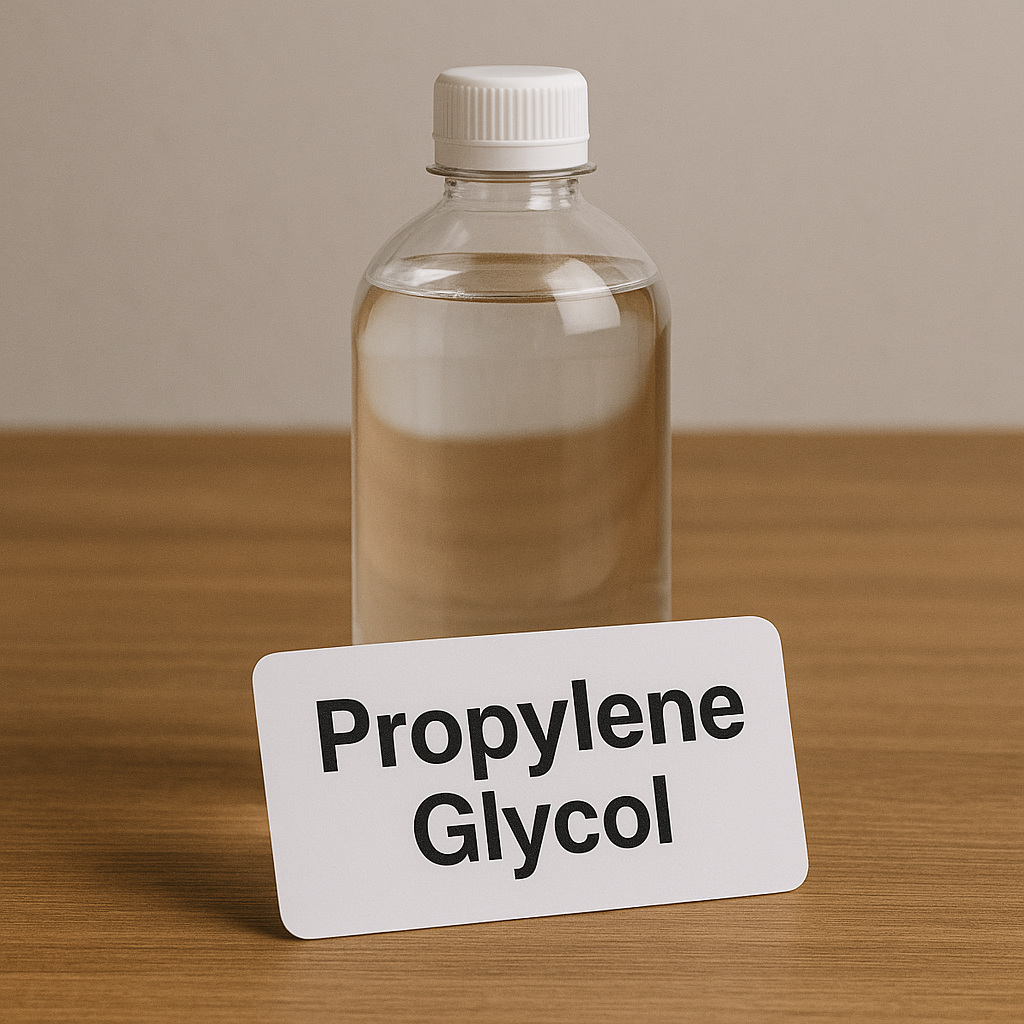
Propylene Glycol

Key supply characteristics

  • B2B-focused supply of propylene glycol for industrial and professional environments, not for private consumer orders through this page.
  • Typical industrial contexts can include use as a solvent, carrier, heat transfer fluid or humectant in customer-designed formulations and systems, with all technical decisions defined by each customer's internal standards and local regulations.
  • Supplied as part of broader industrial chemicals and raw materials programs, alongside products such as sodium hypochlorite, hydrochloric acid, caustic soda, calcium chloride, calcium carbonate, citric acid, sodium bicarbonate, isopropyl alcohol, oxalic acid, phosphoric acid, magnesium sulfate, acetic acid and formic acid, depending on each customer's portfolio.
  • Product documentation, including specification sheets and safety data sheets, is available for business customers as part of the enquiry and RFQ process and is aligned with the agreed supply conditions for propylene glycol.
  • Handling, storage, dosing and any application-specific conditions are defined and controlled by each customer in line with their own safety, environmental and regulatory obligations, including any site permits and industry guidance.

Product overview

Hydrochloric acid is an industrial chemical that organizations integrate into their own processing, pH control and cleaning programs. On the RawChemix side it is treated as a B2B product within the wider industrial chemicals and raw materials portfolio, supplied to professional users who already operate with internal procedures, trained personnel and local regulatory frameworks.

For each cooperation, hydrochloric acid is discussed together with specifications, documentation and logistics patterns that fit the customer's operations. RawChemix works with business customers in regions such as Australia, New Zealand, Asia, the Middle East and North America, where hydrochloric acid is often only one element of a broader industrial chemicals program. The information on this page is a general product overview for business users and does not replace customer-specific procedures, safety documentation, regulatory guidance or professional advice; every organization remains responsible for deciding whether and how hydrochloric acid is suitable for its own applications and for implementing appropriate handling, storage, dosing and protective measures according to local rules and internal standards.
Typical industrial contexts

Process & pH control

Used by many industrial operators as one of the chemicals in processing and pH control programs, with all dosing and control parameters defined by the customer's own technical teams and local regulations.

Manufacturing operations

Integrated by industrial customers into manufacturing steps, cleaning and maintenance routines, according to internal standards, engineering guidance and site-specific procedures.

Facility & utilities

Used by professional facility and utility operators as part of broader treatment and maintenance strategies, implemented under their own risk management and compliance frameworks.

Service providers

Utilized by professional service companies and contractors that manage processing, pH control, cleaning or related programs for their clients, with technical decisions and responsibilities remaining on the service provider and customer side.

Product & supply information

Product name Propylene glycol (C3H8O2)
Product category Industrial chemicals & raw materials
Typical form Liquid propylene glycol grades discussed during RFQ
Intended customers Business and professional users only (B2B)
Typical use context Industrial and technical formulations defined by the customer
Area served Australia, New Zealand, Asia, Middle East, North America
Scope of supply Bulk and contract deliveries agreed directly with each customer

Quality, documentation & logistics

Specification sheet Provided for propylene glycol as part of the technical and commercial discussion
Safety documentation Safety data sheet (SDS) shared with business customers
Typical packaging Industrial packaging formats defined during RFQ and contract stage
Quality framework Supplied under established quality and documentation procedures
Documentation languages Primarily English; other options may be reviewed on request
Logistics notes Routes, ports and schedules coordinated with each customer's supply chain team

Shipping & logistics

Planned ocean freight

Ocean freight solutions used for many bulk and contract shipments. Transit windows, routes and ports are reviewed during the RFQ process and agreed directly with each customer's logistics and supply chain teams.

Air freight for time-sensitive cases

Where appropriate, business customers may discuss air freight options for time-sensitive deliveries. Availability, routes and typical lead times are evaluated on a case-by-case basis as part of the commercial discussion.

Region-specific logistics

Logistics patterns for Australia, New Zealand, Asia, the Middle East and North America are aligned with each customer's existing supply chain, preferred ports, Incoterms and handling procedures.

Packaging, documentation & handling

Each shipment is arranged as an industrial B2B delivery. Packaging formats, documentation and handling expectations are discussed with the customer and confirmed during the RFQ and contract stages. In practice, a shipment typically includes:

  • Industrial-grade packaging formats agreed with the customer (for example bulk, IBC or drums, where applicable)
  • Technical documentation such as specifications and safety data sheets provided to business customers
  • Shipment and tracking information shared for supply chain visibility and coordination
  • Agreed insurance and risk allocation according to contract terms and applicable Incoterms

Handling, storage and any application-specific procedures are defined and implemented by each customer within its own safety, environmental and regulatory framework.